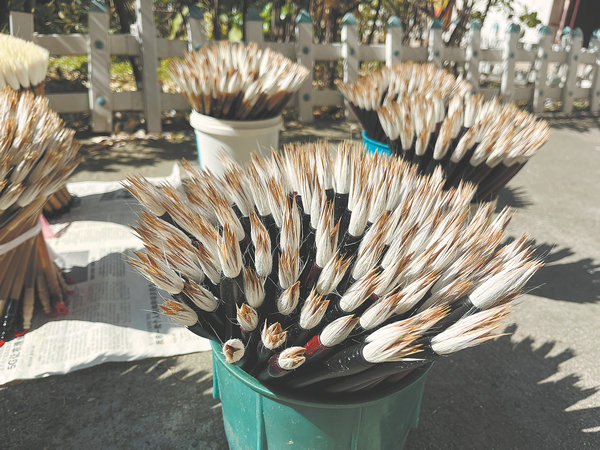
Huzhou Ink Brush
Introduction
The Huzhou ink brush, or Hu brush, stands as a cornerstone of Chinese traditional culture, revered as one of the "Four Treasures of the Study" alongside xuan paper, duan ink stone, and hui ink. Celebrated for its exquisite craftsmanship, the Huzhou ink brush is prized for its sharpness, precision, and durability, making it an indispensable tool for traditional Chinese calligraphy and painting. Originating from Shanlian town in Huzhou city, Zhejiang province, this iconic brush boasts a history spanning centuries and remains a vitl contributor to the local economy. Recognizing its cultural and historical significance, the art of Huzhou ink brush making was officially designated a national intangible cultural heritage in 2006.
The Huzhou ink brsh is distinguished by its carefully engineered structure, harmonizing supple fur tips with sturdy bamboo handles. Its capacity to produce fine, nuanced strokes has rendered it indispensable to Chinese calligraphers and painters alike, empowering artists t express their creativity and emotions through intricate lines and patterns. The production process, a testament to the dedication and expertise of generations of artisans, involves over 120 meticulous steps.
History
The history of the Huzhou ink brush is inextricably linked to the evolution of Chinese writing and painting. Archaeological evidence suggests that brushes were used as early as 6,000 years ago, with traces discovered on pottery shards and oracle bones dating back to the Shang Dynasty (c.16th century-11th century BC). The oldest extant writing brush found in China dates to the early Warring States Period (475-221 BC), predating the widely-held belief that General Meng Tian of the Qin state invented the brush in 223 BC.
During the Yuan Dynasty (1271-1368), Huzhou rose to prominence as the leading center for writing brush production, eclipsing established regions such as Xuancheng in Anhui province. The influx of skilled artisans to Huzhou during the Southern Song period (1127-1279) further cemented its reputation as a brush-making hub. By the Ming (1368-1644) and Qing (1644-1911) dynasties, Huzhou ink brushes were highly sought after, often presented as coveted tributes to emperors.
The craft truly flourished in Shanlian town, where generations of artisans refined their techniques. Esteemed calligraphers, such as Huzhou native Zhao Mengfu, played a pivotal role in elevating the status of the Huzhou ink brush. Zhao's passionate dedication to calligraphy and his meticulous care for his brushes inspired artisans to perfect their craft, ensuring the consistent production of exceptionally high-quality brushes.
Manufacturing Process
Materials Used
The Huzhou ink brush is meticulously crafted using carefully selected materials, guaranteeing its superior quality and performance. The brush tip is typically fashioned from goat wool, prized for its exceptional ink absorbency. Goat wool brushes are particularly well-suited for writing large characters on expansive paper, a style favored by calligraphers during the Qing Dynasty. Other materials used for the brush tips include hare fur and yellow weasel fur, each lending unique characteristics ideal for diverse writing and painting styles.
The handle of the brush is traditionally fashioned from bamboo, providing a lightweight yet durable structure. Bamboo handles are carefully hollowed to accommodate the brush tip, ensuring a comfortable and balanced grip for the user. The seamless combination of supple fur and sturdy bamboo creates a harmonious balance between flexibility and precision, allowing for a smooth and even flow of ink during use.
Craftsmanship Techniques
The production of a single Huzhou ink brush encompasses eight major procedures, intricately subdivided into an astonishing 128 steps. These stages include washing, sorting, combing, shaping, drying, bundling, inserting the brush tip into the handle, and polishing. Each step demands exceptional skill and unwavering patience, as artisans strive to maintain the highest standards of quality and precision.
One of the most critical procedures is the "water basin process," traditionally performed by skilled women artisans. This involves meticulously combing wet goat wool with a specialized bone comb to align the tips and remove any substandard strands. The artisans must adopt a specific sideways posture to effectively transfer strength to their hands while simultaneously preventing damage to the delicate tips. This demanding posture, coupled with the repetitive nature of the work, renders the process physically taxing.
Polishing represents another essential step, generally undertaken by male artisans. This stage entails the meticulous removal of any remaining substandard wool, ensuring that the brush achieves a flawlessly smooth and pristine white finish. The silhouette of a well-crafted brush ideally resembles either a bamboo leaf or a bamboo shoot, depending on its size. The tip of the brush is a defining characteristic; it must spread out fully and uniformly when pressed, gracefully return to its original conical shape upon lifting, and maintain its resilience and durability over extended use.
Cultural Significance
The Huzhou ink brush transcends its function as a mere writing and painting implement; it serves as a vibrant embodiment of Chinese heritage and culture. Over millennia, the brush has played a pivotal role in recording history, articulating thoughts, and producing exquisite works of art and literature. It has profoundly influenced the evolution of Chinese civilization, acting as a potent medium for expressing emotions, ideas, and artistic creativity.
Renowned scholars and calligraphers have consistently emphasized the profound spiritual essence of Chinese culture embodied within the writing brush. The brush's unique ability to convey diverse temperaments, personalities, and attitudes toward life has elevated it to a symbol of cultural identity and artistic excellence. The Huzhou ink brush also stands as a compelling testament to the ingenuity and wisdom of ancient Chinese artisans, showcasing their unwavering dedication to masterful craftsmanship and ceaseless innovation.
Beyond its intrinsic cultural significance, the Huzhou ink brush has played a crucial role in facilitating global cultural exchanges, serving as a cultural bridge during the 1980s and 1990s. Its distinctive design and unparalleled craftsmanship have garnered international acclaim, with brushes exported to countries such as Japan, Singapore, and Malaysia.
Preservation and Promotion
Renewed efforts to preserve and promote the Huzhou ink brush have gained significant momentum in recent years, fueled by a growing recognition of its immense cultural and historical value. In 2006, the craft was officially designated as a national intangible cultural heritage, underscoring the urgent need to safeguard this ancient tradition for future generations. Shanlian town has invested over 3 billion yuan to develop a dedicated zone for brush production, supporting 358 enterprises specializing in Huzhou ink brush-related businesses.
Dedicated artisans and proactive cultural institutions have implemented a range of innovative initiatives to ensure the continuity of the craft. These include comprehensive mentorship programs, in-depth research courses, and engaging workshops in local primary and secondary schools. The Shanlian Huzhou Ink Brush Factory has also evolved into a captivating tourist destination, offering visitors a unique opportunity to learn about traditional brush-making techniques and even participate in the production process.
Innovations in brush-making continue to be introduced to meet the evolving needs of contemporary writers and artists. Artisans are actively experimenting with diverse materials and novel designs to create brushes that cater to an ever-expanding range of preferences. Traditional Huzhou brush brands are strategically collaborating with modern businesses to effectively reach younger audiences and expand their market presence in the digital age.
The Huzhou ink brush remains a powerful symbol of cultural heritage and artistic excellence, embodying the rich history and enduring traditions of Chinese civilization. Through unwavering preservation and proactive promotion efforts, this timeless craft continues to inspire and connect people across generations and borders, ensuring its legacy for centuries to come.








